Health and Safety Policy for House Clearance Marylebone
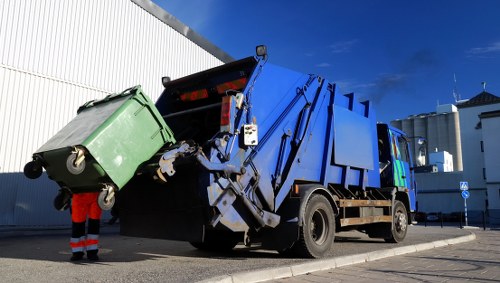 Purpose and scope: This Health and Safety policy sets the standards for safe operation of our house clearance Marylebone activity and associated rubbish removal tasks carried out by our clearance teams. It applies to all house clearance services, including domestic clear-outs, tenancy voids, estate clearances and small business clearance work within our service area. Our aim is to protect employees, contractors, clients and the public by minimising risks related to waste handling, transport and disposal, and by ensuring consistent compliance with recognised safety practices.
We implement a proactive approach to risk awareness and control. The policy defines responsibilities, training expectations, safe systems of work, and incident reporting procedures. It is intended to be used by supervisors, operatives and administrative staff so that the operational delivery of a Marylebone house clearance remains safe and efficient. The policy is reviewed regularly to reflect changes in industry practice, waste categorisation and vehicle safety standards.
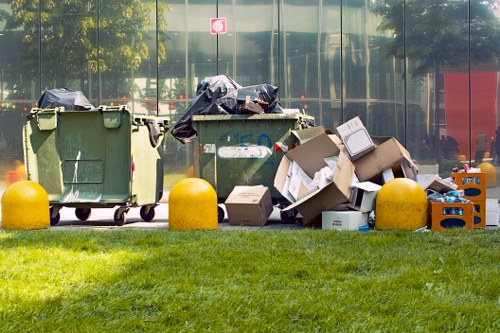 All employees and subcontractors must read and understand this policy. A rubbish company operating in our service area is expected to embed these requirements into everyday clearance work. Staff are required to use provided personal protective equipment (PPE), follow manual handling guidelines, and adhere to vehicle loading rules. Contractors engaged for specialist removals, hazardous materials or electrical items must provide evidence of competence and operating procedures before work begins.
Responsibilities and organisational arrangements
Management will: ensure that suitable and sufficient risk assessments are conducted for every clearance project; allocate the necessary resources to control hazards; and maintain records of training, qualifications and vehicle checks. Supervisors must monitor site safety, brief teams prior to each job, and stop work if conditions become unsafe. Operatives must follow instructions, wear issued PPE and report hazards immediately. We encourage a culture of shared responsibility so that each clear-out is treated as a controlled operation rather than routine disposal.
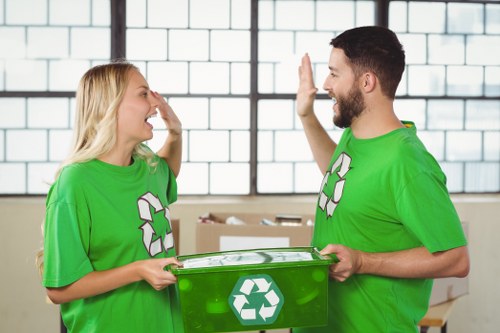 Risk assessments will identify potential issues such as sharps, asbestos-containing materials, electrical hazards, unstable furniture and biohazards. Where risks cannot be adequately controlled by standard precautions, work will be halted and specialist removal arranged. The policy includes procedures for handling suspected hazardous items: do not touch, cordon off the area, and notify the supervisor. For general rubbish removal and bulky item collection, practical controls include team lifting, mechanical aids, correct bagging and segregation for recycling and landfill.
Key control measures include:
- PPE: gloves, safety boots, high-visibility clothing, eye protection and respirators where indicated.
- Manual handling: training in safe lifting techniques, use of trolleys and lifting straps to reduce musculoskeletal injuries.
- Vehicle safety: secure loads, regular vehicle maintenance and safe driving procedures for collection and transport of waste.
Operational procedures and safe systems of work
During any clearance job, teams will conduct a job-specific briefing covering access, pedestrian routes, lifting points and disposal strategy. A site plan or simple sketch must be recorded where multiple crews operate. Emergency procedures and nearest assembly points will be explained. For residential clearances, operatives must be mindful of staircases, narrow corridors and potential trip hazards when removing furniture and waste; lighting and floor protection will be used as needed to reduce damage and risk.
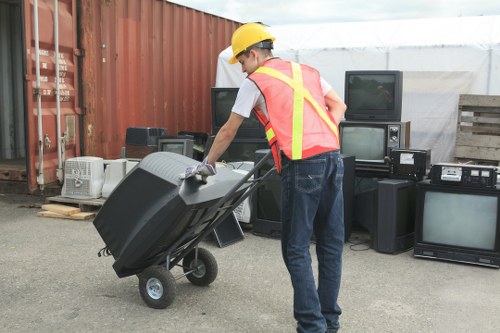 Waste segregation is integral to reducing environmental and safety risks. Materials will be separated at source into recyclable, non-recyclable and hazardous streams. Electrical items will be tagged and stored safely pending appropriate recycling or specialist disposal. Items suspected of asbestos or chemical contamination will be isolated and handled only by licensed specialists. This reduces exposure risks to staff and minimises cross-contamination during transport.
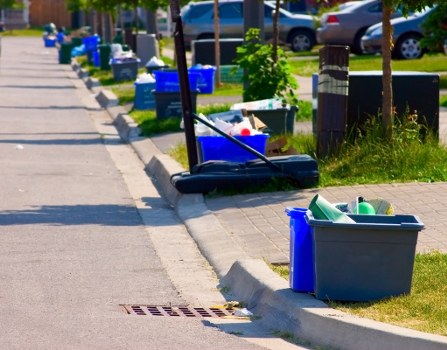 Training, competence and incident management: all staff will receive induction training and periodic refresher courses covering manual handling, PPE use, sharps awareness and manual handling. Supervisors are trained in risk assessment and incident response. Any accidents, near-misses or dangerous occurrences are to be reported immediately and recorded. A formal investigation will follow to identify root causes and corrective actions, with findings communicated to the workforce to prevent recurrence.
Monitoring and continual improvement: the effectiveness of this Health and Safety policy will be monitored through routine site audits, vehicle checks and review of incident data. Feedback from operatives, clients and waste partners will inform regular updates to procedures. We commit to benchmarking our safe working practices against industry standards for house clearance and rubbish removal services and to improving control measures where necessary.
Legal compliance and contractor engagement: the company confirms its obligation to comply with applicable health, safety and environmental legislation. Subcontractors must demonstrate equivalent standards and provide documentation of their own safety arrangements. This policy is not a substitute for statutory requirements, but it provides the operational framework for meeting those requirements in day-to-day clearances.
Conclusion: through consistent application of risk management, training and good working practices, our aim is to deliver safe, reliable and efficient house clearance services across our service area. By treating safety as a core part of every job, the organisation reduces harm, protects reputations and ensures that waste and rubbish removal operations are carried out responsibly and professionally.